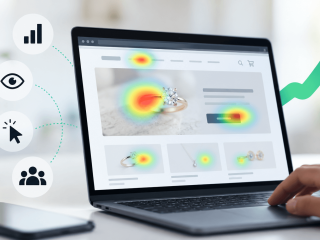
A shopper asks an AI assistant to compare three engagement rings, explain the differences between the stones and find a jeweller that can deliver before a particular date. The assistant gives them a shortlist. When the shopper opens one of those product pages, the first thing they look for may be a delivery estimate.
If that estimate is buried in a policy page or only appears at checkout, the jeweller risks losing a sale over a question the shopper was ready to settle.
That’s the shift worth watching in conversion rate optimization (CRO). AI assistants can handle part of the research and comparison that once happened across several websites. By the time a visitor arrives, your site may have a specific job to do: confirm a detail, establish trust or make the next action easy.
What the early data shows
Adobe reported that in September 2026, AI-referred visits to the U.S. retail sites it measured generated 83% more revenue per visit than visits from non-AI sources. Revenue per visit captures both how often people buy and how much they spend. It gives retailers a commercial reason to pay attention to this traffic. business.adobe.com
That figure reflects Adobe’s retail sample. Your own results will depend on what you sell, which pages visitors land on and how much traffic you can attribute to AI referrals. For a business that sells through conversations and proposals, the more useful question is whether those visits produce qualified enquiries, booked meetings and, eventually, new business.
Give visitors a way to verify what they’ve learned
Think about the difference between a visitor browsing a jewellery collection and one who arrives on a specific ring page with a deadline. The first may want to explore styles. The second wants to know whether the ring can be resized, what customization costs and when it can ship. Both visitors can use the same page. Where you place those answers determines how much work each person has to do.
Start by asking your sales and customer service teams which questions come up just before someone buys. Look for questions with commercial consequences. Can I return a custom order? Is this item in stock? Can you deliver to my location? Put the answers close to the point where the customer is deciding whether to proceed. Use the language customers use when they ask.
The same principle applies to businesses that sell expertise. Imagine a managing director who has shortlisted three firms to review a proposed website investment. A short case example near your enquiry button can show how you helped another leadership team weigh a similar decision. Explain what was at stake, what you recommended and what changed. That gives the reader something concrete to discuss with colleagues before they contact you.
Test the decision, then measure the outcome
A practical starting point is to choose one page tied to revenue and identify one decision visitors make there. On an ecommerce page, that might mean testing whether a clear delivery estimate beside the purchase button helps more shoppers complete their orders. On a consulting page, it might mean testing whether a relevant case example generates more enquiries from the kinds of companies you want to work with.
Choose the measure before you make the change. A delivery message could increase clicks on Add to Cart while leaving completed orders flat. A new enquiry form could generate more submissions while sending the sales team fewer qualified prospects. Follow the result far enough to see whether the change helped the business.
Where referral data is available, compare identifiable AI traffic with other sources and look at which pages those visitors land on. Treat those comparisons as directional when volumes are small. You can still test a promising improvement across all eligible visitors. A clearer delivery estimate or a more relevant case example can help someone who arrived through Google, a referral or an email campaign, too.
Use AI to speed up the work
AI can help summarize recurring sales questions, draft variants and give your team several ways to explain a complicated offer. The judgment comes in deciding which question is worth testing and what evidence would justify making the change permanent. Optimizely’s 2026 report, drawing on 173,000 experiments, examines how teams are adopting AI and what distinguishes stronger experimentation programs as testing scales. optimizely.com
A useful question for your next website review is this: If a customer arrived already considering us, what would they need to see before they felt comfortable moving forward?
You may find the answer in a policy customers rarely read, a detail your sales team explains on every call or a case study buried three clicks deep. Bring that information to the point of decision and measure what happens. As more research takes place before the visit, the pages that earn the sale or enquiry will be the ones that give people enough evidence to act.